The First Million-Dollar Question
The actual million-dollar question that, if we somehow find the answer to, might finally put us on the road to responsible adulting.
Lucky for us, investing is pretty easy to explain and even easier to understand.
So what is investing? It is nothing more than another source of income. However, instead of slogging away hours and labor for a predetermined salary, investments pay by compounding your money on top of itself.
That might sound a little abstract, so for now, think about collectibles like Pokémon cards or Beanie Babies. Keep it in the back of your mind, and we will come back to that in just a moment.
What is Compounding?
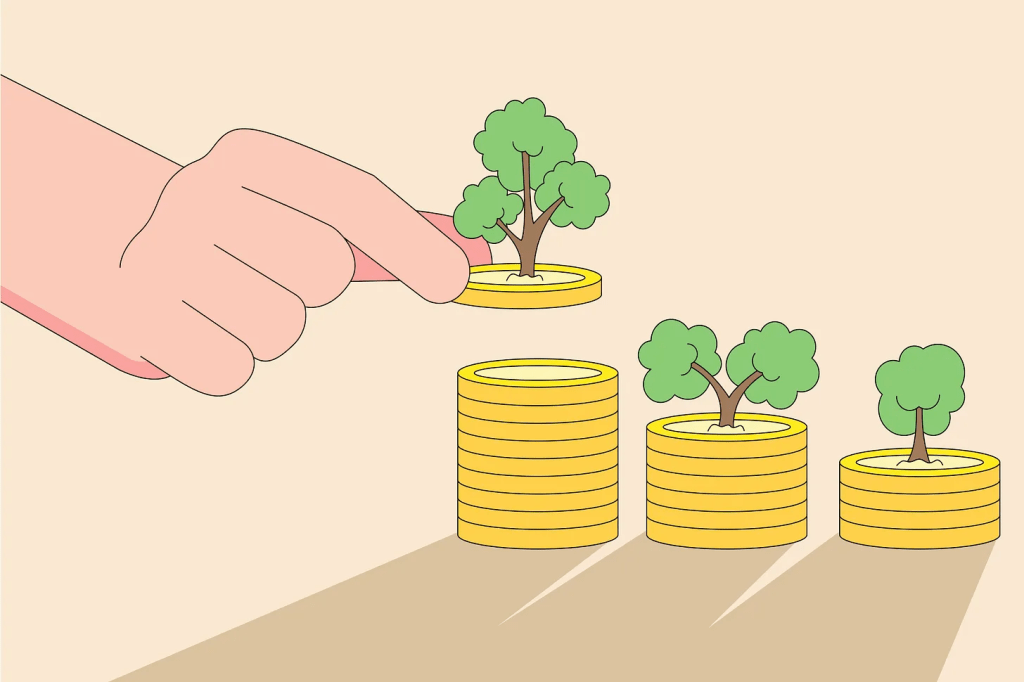
Compounding in finance means to have your money make more money, creating exponential growth. This is easier to explain with an analogy, so let me introduce my family’s old avocado tree.
In my childhood home, we planted an avocado seed in our backyard. That seed sprouted, and in just a few years, grew into a tree. The tree provided us with an abundance of avocados for the years to come, without much effort outside of occasional waterings.
My avocado tree grew and eventually provided more avocados in the future. A successful investment should compound and do the same to your money.
Some might even say that investing your money is like planting a money tree for the future.
Bridging the gap between avocado trees and reali-trees
Hah, see what I did there? Anyways…
How does one go about growing their money in the same way an avocado seed grows to provide more avocados?
Simple. We buy a type of good called financial assets. Financial assets are special goods that can rise in price after being bought and/or pay the owner an income just because they own them.
There are a lot of goods that can be categorized as financial assets. Remember that Pokémon card or Beanie Baby from earlier?

Well, imagine buying those collectibles for $10 and then selling them for $300 a few years later. Another example could be owning a house and renting it out for a monthly income. If you have ever heard of the stock market, that is a digital marketplace that sells a financial asset called stocks. Stocks are my most bought financial asset and the primary focus of this series.
While you are not planting a physical money tree, both scenarios end with making more money than you put in. This process of buying, holding, and selling financial assets is called investing.

With enough investments in your backyard, it is certainly possible to develop a steady and livable income. In fact, that is actually a goal for most investors. Achieving this means obtaining financial independence, where one can live financially free from traditional employment.
Sounds nice, right? It also probably sounds too good to be true. So what’s the catch? Like a seed to a tree, it can take a long time to grow your money until it’s livable. Compounding can test your patience as the ‘paycheck’ arrives at variable times, rather than on a regular schedule.
Lastly, it is useful to learn how to budget and save enough money to invest comfortably. Having emergency savings of at least 3-6 months’ living expenses and understanding your spending habits are good financial practices and common recommendations. They can also go a long way, especially as you venture into unknown territory.
All in all, the next time you hear a flock of adults squawking about investing, imagine they are talking about the woes and wiles of cultivating their money garden. Picking plants is difficult, the weather is unpredictable, but that’s really all there is to it. Gardening should not instill any fear in anyone.

What’s Next
After answering, “What is investing?” I followed up with, “What do I invest in?”
If you ever find yourself opening a botany book, you’ll realize that there are about a million plants that can go in your backyard. Finance can feel the same way, maybe even a little more overwhelming.
The next few articles will take quick detour into budgeting and then what it is we can invest in, which are admittedly hefty subjects. Don’t worry, by the end of it, speaking the language of finance will be as easy as saying hello.
 Calvin Huang